
 info@countertopsandfloors.com
 When Should You Replace Your Flooring? 7 Signs Granbury Homeowners Should Know
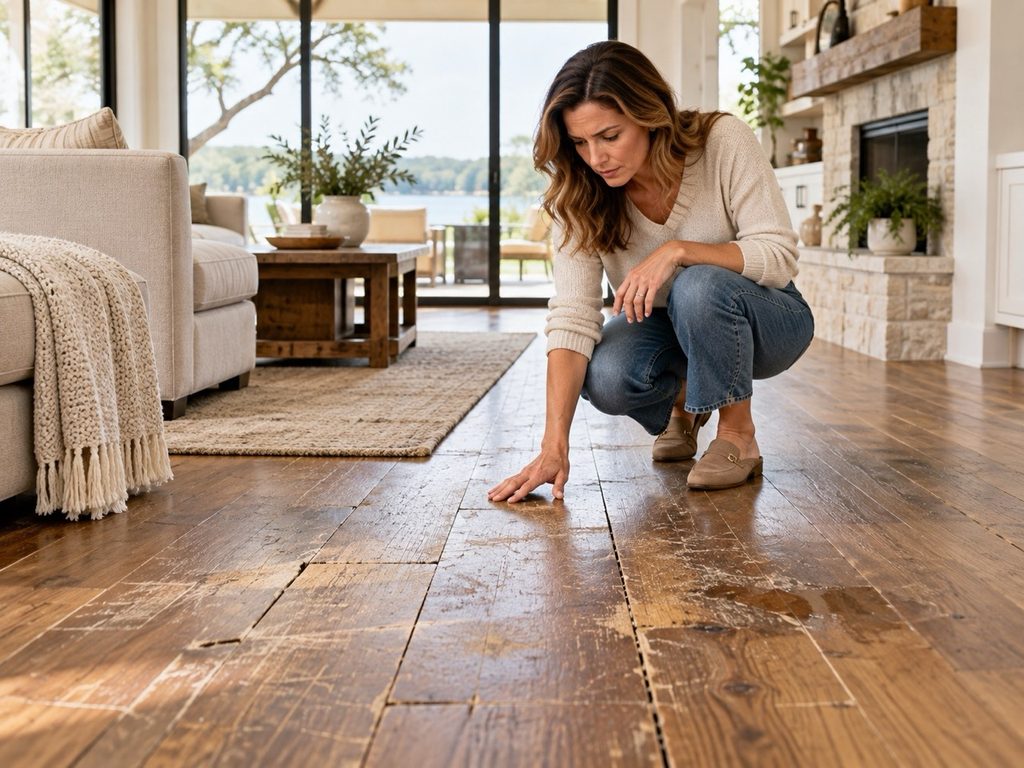
A few scratches or an outdated color do not automatically mean your floors need to go. Some damage can be repaired, hardwood can sometimes be refinished, and a single broken tile may be replaceable. Other problems, particularly recurring moisture damage or an unstable surface, deserve a closer look before they spread.
For Granbury homeowners, the useful question is not simply how old the flooring is. It is whether the material is still sound, safe to use, and suited to the room. At Countertops & Floors in Granbury, we help homeowners weigh those factors alongside appearance and budget.
Here are seven signs worth checking, plus a practical way to decide whether a repair, refinishing, or full flooring replacement is the better next step. Our Granbury flooring and installation team can also help you compare replacement options when a new floor makes sense.
1. Water damage keeps coming back
A spill that is cleaned up quickly is different from water that repeatedly reaches the underside of a floor. Watch for planks that cup or swell, laminate edges that lift, discoloration that returns after cleaning, or a persistent musty smell near a sink, exterior door, or appliance.
The first priority is identifying the source. A leaking dishwasher, plumbing connection, or moisture entering from below can damage new flooring just as easily as old flooring. Replacing the visible surface before correcting the moisture problem is likely to waste money.
Repair may be reasonable when the moisture source is corrected, the affected area is small, and the flooring system allows individual pieces to be replaced. Replacement becomes more likely when moisture has affected a larger area, damaged the subfloor, or caused materials to lose their shape.
2. The floor feels soft, uneven, or unstable
A section that flexes unexpectedly, feels spongy, or moves underfoot can indicate a problem below the visible finish. A loose plank is not the same as a weakened subfloor, and a slightly uneven transition is not necessarily a structural issue. The cause matters.
Pay attention to changes such as a soft spot near a toilet or sink, tiles that repeatedly crack in the same area, or a section that noticeably shifts when walked on. These deserve an inspection rather than another cosmetic patch.
In some homes the solution is repairing the substrate and reinstalling suitable flooring. In others, the damaged flooring must be removed to reach the underlying problem. Do not assume a new layer installed over the old one will correct movement or softness.
3. Cracks, lifting edges, or loose pieces create trip hazards
A chip in one tile may be a straightforward repair. Raised edges along a walkway, loose tiles, curling vinyl, or planks that separate can be a different matter, particularly in rooms used by children, older adults, or anyone with mobility limitations.
The key distinction is whether damage is isolated or widespread. If the same repair keeps failing, there may be an installation, movement, moisture, or subfloor issue that needs attention first.
Temporary fixes such as loose rugs over damaged spots can introduce their own tripping risks. It is better to address the cause and create a stable walking surface.
4. Carpet stains or odors remain after proper cleaning
Carpet can sometimes recover surprisingly well with appropriate cleaning. But stubborn odors, repeated pet accidents, damaged padding, or stains that return can indicate the issue is below the carpet fibers.
Before replacing it, consider whether the odor comes from the carpet, padding, or another moisture source. If the carpet is otherwise sound, professional cleaning may help. If both carpet and pad are affected over a broad area, replacing only the top layer may not solve the problem.
When changing materials, think about what contributed to the damage. A family with pets may prefer a flooring product with easier surface cleanup in main traffic areas, while keeping carpet in bedrooms for comfort.
5. Everyday wear has gone beyond a practical repair
Dull finish, surface scratches, faded high-traffic paths, and worn spots are common signs of use. They do not all call for the same solution.
Solid hardwood can sometimes be sanded and refinished, depending on its condition and prior refinishing. Some engineered wood can also be refinished, but that depends on the thickness of its real-wood wear layer. Many laminate and luxury vinyl products cannot be sanded back to a fresh surface; damaged boards or planks may need to be replaced instead.
Look at how much of the room is affected. If a repair would leave obvious mismatched patches across several areas, a full replacement may produce a better result. But when wear is confined to a small section and matching material is available, replacing the entire floor may be unnecessary.
6. You are paying for the same repairs over and over
One repair is routine maintenance. Several repairs to the same kind of failure suggest the flooring may no longer be performing well in that location.
For example, repeated gaps or lifting in a room with direct afternoon sun may point to movement, installation, or product limitations. A kitchen floor that fails repeatedly near a dishwasher needs the moisture source investigated, not simply another replacement plank.
Ask the installer what is causing the pattern and whether it can be corrected. Compare the cost of a durable repair with replacement that also addresses preparation, underlayment, transitions, and the room’s actual conditions. The lower immediate quote is not always the less expensive long-term choice.
7. The flooring no longer fits how you use the room
This is the most flexible reason to replace a floor. It might still be physically sound, but no longer work for your household. Carpet beside a frequently used patio door may be hard to keep clean. A slick or highly polished surface may be uncomfortable for pets. A patchwork of old floors may interrupt the flow of connected rooms.
In these cases, replacement is a lifestyle decision rather than an urgent repair. That distinction helps you plan on your own timeline and choose the material based on the problem you actually want to solve.
You may also want a more consistent appearance if you are updating several adjoining rooms. Before removing usable floors, consider whether refinishing, a better transition, or a smaller update would accomplish the same goal.
Repair, refinish, or replace: how to decide
A useful approach is to separate surface appearance, material damage, and underlying conditions.
- Repair when damage is isolated, the surrounding floor is stable, the cause has been corrected, and matching material is available.
- Refinish when a compatible wood floor has mostly surface-level wear and enough usable material remains for refinishing.
- Replace when the material has failed across a wide area, repeated repairs are not lasting, or the current floor no longer meets the room’s needs.
- Investigate first when you notice recurring moisture, softness, movement, or unexplained odors. The visible floor may not be the root problem.
Age alone is not a reliable replacement schedule. A well-maintained older floor can be in better shape than a poorly installed newer one. Product quality, installation, moisture exposure, traffic, and cleaning all affect how long flooring remains useful.
What flooring makes sense after replacement?
Once you know why the old floor failed or stopped working, you can choose the new surface more intelligently. At our Granbury flooring showroom, homeowners can compare different materials and discuss the conditions in each room.
Luxury vinyl: Often worth comparing for busy living spaces and kitchens. Check the specific product’s wear rating, water performance, subfloor requirements, and sunlight limitations. A waterproof product does not make the room beneath it waterproof.
Porcelain tile: A strong choice where moisture and heavy foot traffic are important. Proper substrate preparation, grout selection, and slip characteristics still matter.
Hardwood or engineered wood: Attractive for living areas and many open layouts. Ask about refinishing potential, moisture sensitivity, and what the manufacturer permits in the intended room.
Carpet: Can be a good fit where softness and sound control matter. Fiber, pile, padding, and cleaning expectations affect performance.
For room-specific advice, our articles on kitchen flooring that handles heat and spills and bathroom flooring options for Granbury homes explain some of the different demands those areas place on a floor.
What to check before requesting a flooring quote
Take a few photos of the damaged areas, including wide shots that show where they are in the room. Note whether the problem appeared after a leak, seasonal change, appliance issue, or recent installation.
It also helps to have an approximate room size and a list of rooms you want to update. Ask whether the quote includes removal and disposal, subfloor preparation, transition pieces, trim work, moving furniture, and any repairs needed before the new surface goes down. Those details can change the scope considerably.
If you are unsure whether the floor can be saved, start with an assessment rather than assuming a complete replacement is necessary.
Choose the solution that fixes the problem
Some floors need little more than a repair or refinishing. Others are giving clear signs that the material or what lies beneath it needs attention. Looking at the cause, the extent of the damage, and how the room is used makes that decision much easier.
Countertops & Floors helps Granbury homeowners compare flooring materials and plan professional installation. Visit our Granbury showroom or call 817-962-2657 to discuss what is happening with your floors and which next step makes sense.